





Congratulations to 2025 MRE Best Paper Award Winners!
Matter and Radiation at Extremes continued its Best Paper Award (BPA) selection this year and the editorial board members chose three articles as the BPA winners among the papers published in 2025 (see the list below, in no particular order). Congratulations to the winners!
Diagnosis of focal spots at relativistic intensity utilizing coherent radiation from laser-driven flying electron sheets
Shirui Xu, Zhuo Pan, Ying Gao, Jiarui Zhao, Shiyou Chen, et al. Matter Radiat. Extremes 1 March 2025; 10 (2): 027202 https://doi.org/10.1063/5.0255211
“Fundamental physics investigations using high-power lasers require exact knowledge about the interaction parameters in order to allow validation of theoretical models and simulations. A key parameter is the laser intensity in the focal spot. Short-pulse, multi-PW laser beams can no longer directly be diagnosed. Most of the time the intensity is deduced from low-power focal spot analysis and separate measurements of energy and pulse duration. However, it is well known that such measurements and thereupon based conjectures have to be considered with appropriate skepticism. In the last decade there has been a demand for more accurate in-situ, real-time measurements of ultra-high intensity laser focal spots. Such approaches utilize information based on particles or radiation properties originating from the focal spot volume without affecting the focal spot itself. The present work can be considered very timely and original in this respect. The authors suggest and experimentally validate a new method based on coherent radiation generated by electron sheets.
This work will no doubt be very useful to the high-intensity laser-matter interaction community to better optimize, control and understand focal spot properties.”
- Dr. Stefan Weber, Associate Editor of MRE
Laser interaction with undercritical foams of different spatial structures
J. Limpouch, V. Tikhonchuk, O. Renner, Sh. Agarwal, T. Burian, et al. Matter Radiat. Extremes 1 January 2025; 10 (1): 017402 https://doi.org/10.1063/5.0225997
“The study by Limpouch et al. makes a significant contribution to the field of high-energy-density physics by systematically investigating a question of fundamental and practical importance: how does the microscopic architecture of an undercritical foam dictate its macroscopic behavior when irradiated by a high-power laser?
The strength of this work lies in its elegant and direct experimental design. By comparing three types of foam targets—traditional TMPTA aerogel, graphene-based foam, and additively manufactured (AM) polymer foam—with similar average densities but radically different pore sizes and filament structures, the role of the spatial structure is analyzed. The deployment of a comprehensive array of diagnostics, including X-ray streak cameras, high-resolution spectroscopy, and K-alpha imaging, allows them to build a complete picture of the plasma formation, heating, and energy transport.
The results are striking and, in some cases, counterintuitive. The observation that the ionization front velocity is largely independent of pore size is a key finding, suggesting that the average density is the primary driver for this macro-parameter. This simplifies the modeling of foam targets for applications like laser imprint mitigation. The study reveals a d structure-dependent effect on hot-electron generation. While the small-pore TMPTA and graphene foams strongly suppressed hot electrons, the AM foam produced a hot-electron dose comparable to a solid target. This points to incomplete homogenization of the larger AM structures and directly links the foam's architecture to the excitation of laser-plasma instabilities.
The data is of high quality, and the discussion connects the experimental observations to the underlying physical processes. It not only provides crucial benchmark data for validating simulation codes but also opens up new questions about the physics of foam homogenization and its control. This work is a landmark reference that will guide future research and the application of low-density targets in inertial fusion and advanced radiation sources.”
-Prof. Dieter Hoffmann, International Guest Editor of MRE
Investigations of key issues on the reproducibility of high-Tc superconductivity emerging from compressed La3Ni2O7
Yazhou Zhou, Jing Guo, Shu Cai, Hualei Sun, Chengyu Li, et al. Matter Radiat. Extremes 1 March 2025; 10 (2): 027801 https://doi.org/10.1063/5.0247684
“In recent years, the exploration on high-Tc superconductivity in compressed nickelate single crystals has become one of the most attractive topics in the field of condensed matter physics and material sciences. While many exciting experimental results have been achieved, several puzzling issues remain: What causes the inconsistent reproducibility of the experimental results? What is the fundamental nature of pressure-induced superconductivity: bulk or non-bulk (filamentary-like)? Where does the superconducting phase locate within the sample if it is filamentary-like? Is the oxygen content important for developing and stabilizing its superconductivity? In this study, the authors employed multiple high-pressure techniques to address these crucial issues. Most notably, from a comprehensive analysis of available experimental data, they were the first to report that superconductivity in bilayer nickelate single crystals is filamentary in nature and likely occurs at the interface between La3Ni2O7 and La4Ni3O10 phases. They also demonstrate that oxygen content is crucial for the development and stabilization of this superconductivity. Their findings not only shed light on the unresolved issues of this material but also offer valuable insights and methodological guidance for investigating other complex, non-bulk superconducting systems stabilized by external pressure.”
-Editorial board of MRE
Congratulations to 2024 MRE Best Paper Award Winners!
Matter and Radiation at Extremes continued its Best Paper Award (BPA) selection this year and the editorial board members chose three articles as the BPA winners among the papers published in 2024 (see the list below, in no particular order). Congratulations to the winners!
Characterization of bright betatron radiation generated by direct laser acceleration of electrons in plasma of near critical density
J. Cikhardt; M. Gyrdymov; S. Zähter; P. Tavana; M. M. Günther; et al. Matter Radiat. Extremes, March 2024; 9(2) 027201 https://doi.org/10.1063/5.0181119
“The Best Paper Award of Matter and Radiation at Extremes for column 1, Fundamental Physics at Extremes, is presented to Cikhardt et al. for their work on bright betatron radiation generated by the interaction of a high-intensity laser with foam targets. In their paper, the authors present the first experimental measurement of the betatron radiation driven by the interaction of a sub-ps laser pulse with pre-ionized low-density polymer foam targets. In their article the authors have shown that thanks to the ultra-high photon fluence, point-like radiation source, and ultra-short emission time, keV-backlighters based on direct laser acceleration (DLA) are promising for various applications in high-energy-density research using kilojoule petawatt-class laser facilities.
Thanks to the directional and efficient emission, the brilliance of betatron radiation at 5 keV was estimated to be as high as ∼1021photons·s-1·mm-2·mrad-2 (0.1%BW)-1.. These values are comparable to the photon number and brilliance one would expect in the self-modulated LWFA regime at a laser energy and intensity an order of magnitude higher than the ones used in the present experiment.”
- Dr. Stefan Weber, Associate Editor of MRE
Demonstrating grating-based phase-contrast imaging of laser-driven shock waves
Leonard Wegert, Stephan Schreiner, Constantin Rauch, Bruno Albertazzi, Paulina Bleuel, et al. Matter Radiat. Extremes, July 2024; 9(4) 047803 https://doi.org/10.1063/5.0200440
“Imaging shock waves in laser produced plasmas with high resolution is one of the key problems in the field of Matter and radiation at Extreme. The paper ‘Demonstrating grating-based phase-contrast imaging of laser-driven shock waves’ opens a new path to this problem. L. Wegert and his collaborators developed a 2 gratings Talbot interferometer leading to a successful acquisition of standard absorption, differential phase-contrast, and dark-field images of a shock wave propagating in a target. By accessing to the dark field with the Talbot interferometer, the authors attempt to infer the microstructure of a foam under compression. This paper paves the path to new X-ray radiography potential both on laser produced plasmas and X-FEL facilities for High Energy Density plasmas.”
-Prof. Michel Koenig, Editor of MRE
Design of high-temperature superconductors at moderate pressures by alloying AlH3 or GaH3
Xiaowei Liang, Xudong Wei, Eva Zurek, Aitor Bergara, Peifang Li, et al. Matter Radiat. Extremes, January 2024; 9(1) 018401 https://doi.org/10.1063/5.0159590
“The quest for high-temperature superconductors at moderate pressures remains a significant challenge in condensed matter physics. While hydride superconductors, such as H3S and LaH10, have achieved remarkable superconducting transition temperatures (Tc) above 200 K, their practical applications are constrained by the extreme pressures required for stabilization. Recent efforts to reduce these stabilization pressures through alloying, such as in La-Y and La-Ce systems, have demonstrated improved stability thresholds and enhanced Tc. Building on prior studies of binary hydrides and clathrate structures, this study proposed that alloying not only reduces thermodynamic and dynamic stabilization pressures but also enhances electronic properties favorable for superconductivity.
In this study, the authors systematically design high-Tc superconductors in the ternary AMH6 hydrides (A = Al/Ga; M = Sc, Ti, Zr, or Hf) through crystal structure predictions and first-principles calculations. By alloying AlH3 or GaH3 with group IIIB/IVB metals, the authors identify seven ternary hydrides stabilized in the A15-type structure at significantly lower pressures. Remarkably, AlZrH6 and AlHfH6 exhibit thermodynamic stability within the pressure ranges of 40-150 GPa and 30-181 GPa, respectively, with dynamic stability persisting down to 13 GPa and 6 GPa. These alloys exhibit enhanced electronic density of states at the Fermi level, leading to Tc values of 75 K (AlZrH6 at 20 GPa) and 76 K (AlHfH6 at 10 GPa). Similarly, GaMH6 alloys demonstrate reduced stabilization pressures (e.g., GaZrH6 at 5 GPa) and high Tc (e.g., 70 K for GaZrH6 at 10 GPa). Phonon dispersion and electron-phonon coupling analyses reveal that superconductivity in these systems is driven by soft H vibrational modes and low-frequency metal-dominated phonons. These results not only expand the family of A15-type superconductors but also provide practical guidelines for synthesizing high-performance hydrides at moderate pressures. By integrating configurational entropy effects and advanced computational methods, this research bridges the divide between high-Tc superconductivity and experimentally accessible pressure regimes. The findings align with the broader goal of discovering ambient-pressure superconductors while offering a solid framework for future exploration of ternary hydrides, opening new pathways to overcome one of the most persistent barriers in superconducting materials research.”
-Drs. Xin Yang and Huiyang Gou, Center for High Pressure Science and Technology Advanced Research
Congratulations to 2023 MRE Best Paper Award Winners!
Matter and Radiation at Extremes continued its Best Paper Award (BPA) selection this year and the editorial board members chose three articles as the BPA winners among the papers published in 2023 (see the list below, in no particular order).
Congratulations to the winners!
Spectrum-tailored random fiber laser towards ICF laser facility
Mengqiu Fan, Shengtao Lin, Ke Yao, Yifei Qi, Jiaojiao Zhang, et al; Matter Radiat. Extremes 1 March 2023; 8 (2): 025902. https://doi.org/10.1063/5.0129434
“In the last few years great progress has been made in Inertial Confinement Fusion. However, it is acknowledged by all specialists in the field that parametric instabilities driven by laser-plasma interaction in the corona remain a challenge. They can induce energy loss of the driver beams and generate hot electrons, which can be detrimental to the compression phase. Broadband, low-coherence laser light is considered as a possible way to modify or even suppress the plasma instabilities.
In their recent paper “Spectrum-tailored fiber laser towards ICF laser facility” Mengqiu FAN and his co-authors present a new idea, the random fiber laser, to advance low-coherence, high-energy beams to overcome the problem of instabilities. Their proposal is the first random laser system with megawatt-class peak power with low-coherence properties.”
- Dr. Stefan Weber, Associate Editor of MRE
Direct imaging of shock wave splitting in diamond at Mbar pressure
Sergey Makarov, Sergey Dyachkov, Tatiana Pikuz, Kento Katagiri, Hirotaka Nakamura, et al; Matter Radiat. Extremes 1 November 2023; 8 (6): 066601. https://doi.org/10.1063/5.0156681
“Megabar pressures prevail in the interiors of planets, the first stages of laser-driven fusion energy concepts and high-velocity collision such as meteor impacts or low earth orbit space debris hitting satellites. Laser-driven dynamic shock waves provide one of the few possibilities to access this interesting and physically highly complex regime of matter. Precise diagnostics of such highly dynamic experiment is extremely challenging and only for about 10 years, X-ray Free Electron Lasers have started to provide revolutionary insights into matter dynamically compressed to megabar pressures. Makarov et al. present such a way-leading study by direct imaging of the wave splitting in diamond, which is a key material for many dynamic compression experiments. However, its high strength leads to complex wave structures of an elastic precursor followed by plastic deformation on nanosecond or sub-nanosecond timescale. This process was now elucidated with unprecedented detail at the SACLA X-ray free electron laser providing invaluable benchmarks for the diamond material response under megabar shock compression and will lead the way to a plethora of follow-up experiments also studying other materials.”
- Prof. Dr. Dominik Kraus, Associate Editor of MRE
First-principles study on the conventional superconductivity of N-doped fcc-LuH3
Zihao Huo, Defang Duan, Tiancheng Ma, Zihan Zhang, Qiwen Jiang, et al; Matter Radiat. Extremes 1 May 2023; 8 (3): 038402. https://doi.org/10.1063/5.0151844
Dias’s group reported room-temperature superconductivity in a nitrogen-doped lutetium hydride at near-ambient pressure [Nature 615, 244 (2023)], which would be the most important discovery if it is true. Also open questions remain such as the exact stoichiometry and the positions of the hydrogen and nitrogen atoms. The group led by Defang Duan, took a critical look at the claim by systematically study the phase diagram of Lu–N–H using first-principles calculations. It is found that no ternary Lu-N-H compounds can be stabilized at 1 GPa and the only dynamically stable ternary Lu2H5N requires at least 50 GPa to form. These results provide strong evidence against Dias’s claim and are important to understand the near-ambient superconductivity.
- Dr. Hong Xiao, Guest Editor of MRE
Congratulations to 2022 MRE Best Paper Award Winners!
Matter and Radiation at Extremes released the winners of MRE Best Paper Award in 2022 recently. The award is bestowed to authors of excellent articles published in the journal of Matter and Radiation at Extremes (MRE) in the year of 2022, for appreciating and acknowledging their contributions to MRE, while promoting and encouraging top quality research in the field of matter and radiation under extreme states.
Among ~50 papers published in MRE in the year of 2022, after evaluation and discussion by the committee, it was finally decided to award three articles as the MRE Best Paper Award winners.
Please see the full list below. Congratulations to the winners! (In no particular order)
MRE Best Paper Award Winners
Dream fusion in octahedral spherical hohlraum
Ke Lan; Matter and Radiation at Extremes 1 September 2022; 7 (5): 055701. https://doi.org/10.1063/5.0103362
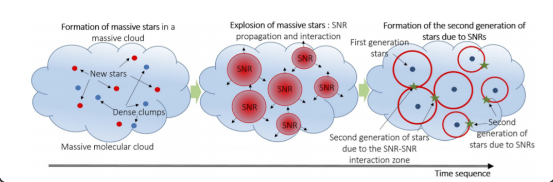
Triggering star formation: Experimental compression of a foam ball induced by Taylor–Sedov blast waves
B. Albertazzi, P. Mabey, Th. Michel, G. Rigon, J. R. Marquès, S. Pikuz, S. Ryazantsev, E. Falize, L. Van Box Som, J. Meinecke, N. Ozaki, G. Gregori, M. Koenig; Matter and Radiation at Extremes 1 May 2022; 7 (3): 036902. https://doi.org/10.1063/5.0068689
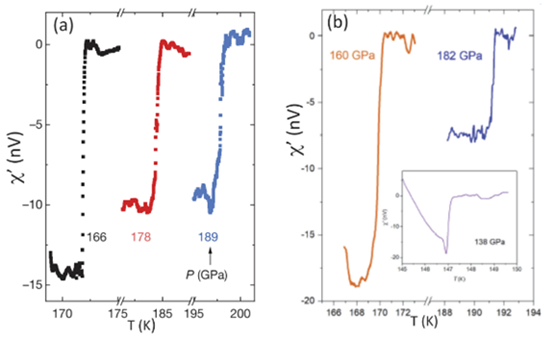
Incompatibility of published ac magnetic susceptibility of a room temperature superconductor with measured raw data
J. E. Hirsch, D. van der Marel; Matter and Radiation at Extremes 1 July 2022; 7 (4): 048401. https://doi.org/10.1063/5.0088429
Congratulations to 2021 MRE Best Paper Award Winners!
Matter and Radiation at Extremes initiated the MRE Best Paper Award in 2021, which is bestowed to authors of excellent articles published in the journal in the past three years, for appreciating and acknowledging their contributions to MRE, while promoting and encouraging top quality research in the field of matter and radiation under extreme states.
Among 120 papers published in MRE from 2018 to 2020, after evaluation and discussion by the committee, it was finally decided to award three articles as the MRE Best Paper Award winners. We also celebrate the nine excellent articles nominated for the MRE Best Paper Award.
Please see the full list below. Congratulations to the winners! (In no particular order)
MRE Best Paper Award Winners
Current status and highlights of the ELI-NP research program.
A. Tanaka, K. M. Spohr, D. L. Balabanski, S. Balascuta, L. Capponi, M. O. Cernaianu, M. Cuciuc, A. Cucoanes, I. Dancus, A. Dhal, B. Diaconescu, D. Doria, P. Ghenuche, D. G. Ghita, S. Kisyov, V. Nastasa, J. F. Ong, F. Rotaru, D. Sangwan, P.-A. Söderström, D. Stutman, G. Suliman, O. Tesileanu, L. Tudor, N. Tsoneva, C. A. Ur, D. Ursescu, and N. V. Zamfir
“The review paper from Prof. Tanaka on the status and upcoming commissioning of the Extreme Light Infrastructure in Romania stands out from the majority of articles published in MRE. It provides a detailed overview of one of the most important scientific infrastructures built in the European Union. It describes in a very accessible and at the same time comprehensive way the physics to be studied and the technology which makes it possible. This article won the MRE Best Paper award because it is a perfect introduction for young scientists entering this specific field and a perfect reference for the potential user community which will soon perform unique experiments in this installation.”
- Stefan Weber, Associate Editor of MRE
Joseph Nilsen, Andrea L. Kritcher, Madison E. Martin, Robert E. Tipton, Heather D. Whitley, Damian C. Swift, Tilo Döppner, Benjamin L. Bachmann, Amy E. Lazicki, Natalie B. Kostinski, Brian R. Maddox, Gilbert W. Collins, Siegfried H. Glenzer, and Roger W. Falcone
“Extremely high pressure hugoniots (above 400 Mbar) were previously rarely achieved unless using nuclear explosions. Here it is the first time using NIF that such matter at extreme has been reached opening a new domain of EOS exploration. In this paper radiation issues are discussed both coming from hard x-rays generated on the cavity walls or by the shock itself as its temperature becomes extremely important. This paper won the MRE Best Paper Award because it is one the first showing the convergence to atomic pressures that might revolutionize our understanding of the extreme pressure domain.”
- Michel Koenig, Co Editor-in-Chief of MRE
Superconductivity in La and Y hydrides: Remaining questions to experiment and theory.
Viktor Struzhkin, Bing Li, Cheng Ji, Xiao-Jia Chen, Vitali Prakapenka, Eran Greenberg, Ivan Troyan, Alexander Gavriliuk, and Ho-kwang Mao
“Since the discovery of the first superconductor in 1911, the pursuit and exploration on room-temperature superconductivity have never come to stop. For now, pressurizing metal hydrides appear to be a "shortcut" to this Holy Grail of condensed matter physics. In this review article, Struzhkin et al. summarized the latest results of theoretical and experimental studies on metal hydride high-temperature superconductivities. They also proposed that high-Tc superhydrides may be "doped" with metallic hydrogen based on their own experimental investigations. This review article won the MRE Best Paper award because not only gives us a quick and systematic update on the research of metal hydride high-temperature superconductivity, but also enlightens the debates on the newly emerging hot topics of the field, which would push forward the studies of high-temperature superconductivity.”
- Bin Chen, Guest Editor of MRE
MRE Best Paper Award Nominees
Authors | Article Title |
Lorenz S, Grittani G, Chacon-Golcher E, et al. | |
Chen S N, Negoita F, Spohr K, et al. | Extreme brightness laser-based neutron pulses as a pathway for investigating nucleosynthesis in the laboratory. |
Linke Jochen, Du Juan, Loewenhoff Thorsten, et al. | |
Wang Guiqiu, Yi He, Li Yujiao, et al. | Review of stopping power and Coulomb explosion for molecular ion in plasmas. |
Nikl J, Holec M, Zeman M, et al. | |
Renner O, Rosmej F B. | Challenges of x-ray spectroscopy in investigations of matter under extreme conditions. |
Sauppe J P, Palaniyappan S, Loomis E N, et al. | Using cylindrical implosions to investigate hydrodynamic instabilities in convergent geometry. |
Hirao N, Kawaguchi S I, Hirose K, et al. | New developments in high-pressure X-ray diffraction beamline for diamond anvil cell at SPring-8. |
Mao Ho-kwang, Mao Wendy L. |
2021 MRE Best Paper Award Announcement
About the Award
For appreciating and acknowledging MRE authors’ contributions, while also promoting and encouraging top quality research in the field of matter and radiation under extreme states, MRE would bestow a yearly award - MRE Best Paper Award - to authors of three top papers published in MRE journal in the past three years.
Eligibility
All papers published in MRE from 1 January 2018 to 31 December 2020 are eligible to compete for MRE Best Paper Award. (Review, perspective, original research, letters all included.)
Selection Criteria
The papers will be selected by editors according to the following criteria:
- Scientific merit and broad impact;
- Originality and innovation;
- Citations and downloads;
Nomination and selection processes
20 articles will be nominated by editors from all eligible papers and the selection committee determines the recipients of the Best Paper Award.
The authors who want to self-nominate their article can submit the nomination to: mreeo@aip.org before 31 August 2021. The nomination package should include:
- A nomination letter signed by the author and co-authors describing the role and contribution of the author in the research;
- A copy of the article in PDF format;
- A supporting statement with no more than 150 words;
The MRE Best Paper Award winner receives:
- An official certificate of MRE Best Paper Award;
- Cash prize of RMB 2,000;
- An invitation to upcoming webinar (one of the winners will be invited to give speech at International Conference on Matter and Radiation at Extremes (ICMRE), a serial conference convened annually since 2016, which brings together scientists from all over the world to exchange ideas and discuss latest achievements in the field).