| Citation: | Xinyue Wang, Xin Yang, Liyunxiao Wu, Jun Deng, Qingyang Hu, Huiyang Gou. Recent advances in synthesis, structure, and properties of binary and ternary transition metal phosphides[J]. Matter and Radiation at Extremes, 2026, 11(4): 043801. doi: 10.1063/5.0325095

|

| [1] |
C. V. Funch and G. Proust, “Laser-based additive manufacturing of refractory metals and their alloys: A review,” Addit. Manuf. 94, 104464 (2024).10.1016/j.addma.2024.104464
|
| [2] |
A. A. Aparajita, G. Shwetha, N. S. Kumar, V. Srihari, and A. Mani, “Behaviour of molybdenum diphosphide at high pressure,” Mater. Chem. Phys. 345, 131258 (2025).10.1016/j.matchemphys.2025.131258
|
| [3] |
N. Kumar, Y. Sun, N. Xu, K. Manna, M. Yao et al., “Extremely high magnetoresistance and conductivity in the type-II Weyl semimetals WP2 and MoP2,” Nat. Commun. 8, 1642 (2017).10.1038/s41467-017-01758-z
|
| [4] |
J. H. Pöhls, A. Faghaninia, G. Petretto, U. Aydemir, F. Ricci et al., “Metal phosphides as potential thermoelectric materials,” J. Mater. Chem. C 5, 12441–12456 (2017).10.1039/c7tc03948d
|
| [5] |
K. Y. Ho, F. Zhang, X. Miao, N. van Dijk, E. Brück et al., “Recent progress in magnetoelastic Fe2P‐type materials for magnetocaloric cooling,” MetalMat 2, e70012 (2025).10.1002/metm.70012
|
| [6] |
M. Imada, A. Fujimori, and Y. Tokura, “Metal-insulator transitions,” Rev. Mod. Phys. 70, 1039 (1998).10.1103/revmodphys.70.1039
|
| [7] |
Y. Tokura and N. Nagaosa, “Orbital physics in transition-metal oxides,” Science 288, 462–468 (2000).10.1126/science.288.5465.462
|
| [8] |
F. A. Cotton, G. Wilkinson, C. A. Murillo, and M. Bochmann, Advanced Inorganic Chemistry (John Wiley & Sons, Chichester, 1999), pp. 1–135.
|
| [9] |
A. R. West, Solid State Chemistry and its Applications (John Wiley & Sons, Chichester, 2022).
|
| [10] |
J. G. Bednorz and K. A. Müller, “Possible high Tc superconductivity in the Ba-La-Cu-O system,” Z. Phys. B: Condens. Matter 64, 189–193 (1986).10.1007/BF01303701
|
| [11] |
B. Keimer, S. A. Kivelson, M. R. Norman, S. Uchida, and J. Zaanen, “From quantum matter to high-temperature superconductivity in copper oxides,” Nature 518, 179–186 (2015).10.1038/nature14165
|
| [12] |
P. A. Lee, N. Nagaosa, and X. G. Wen, “Doping a Mott insulator: Physics of high-temperature superconductivity,” Rev. Mod. Phys. 78, 17–85 (2006).10.1103/revmodphys.78.17
|
| [13] |
M. K. Wu, J. R. Ashburn, C. J. Torng, P. H. Hor, R. L. Meng et al., “Superconductivity at 93 K in a new mixed-phase Y-Ba-Cu-O compound system at ambient pressure,” Phys. Rev. Lett. 58, 908 (1987).10.1103/physrevlett.58.908
|
| [14] |
Y. Kamihara, H. Hiramatsu, M. Hirano, R. Kawamura, H. Yanagi et al., “Iron-based layered superconductor: LaOFeP,” J. Am. Chem. Soc. 128, 10012–10013 (2006).10.1021/ja063355c
|
| [15] |
D. J. Singh and M. H. Du, “Density functional study of LaFeAsO1−xFx: A low carrier density superconductor near itinerant magnetism,” Phys. Rev. Lett. 100, 237003 (2008).10.1103/physrevlett.100.237003
|
| [16] |
G. R. Stewart, “Superconductivity in iron compounds,” Rev. Mod. Phys. 83, 1589–1652 (2011).10.1103/revmodphys.83.1589
|
| [17] |
I. I. Mazin, D. J. Singh, M. D. Johannes, and M. H. Du, “Unconventional superconductivity with a sign reversal in the order parameter of LaFeAsO1−xFx,” Phys. Rev. Lett. 101, 057003 (2008).10.1103/physrevlett.101.057003
|
| [18] |
J. Paglione and R. L. Greene, “High-temperature superconductivity in iron-based materials,” Nat. Phys. 6, 645–658 (2010).10.1038/nphys1759
|
| [19] |
D. Li, K. Lee, B. Y. Wang, M. Osada, S. Crossley et al., “Superconductivity in an infinite-layer nickelate,” Nature 572, 624–627 (2019).10.1038/s41586-019-1496-5
|
| [20] |
Y. Nomura and R. Arita, “Superconductivity in infinite-layer nickelates,” Rep. Prog. Phys. 85, 052501 (2022).10.1088/1361-6633/ac5a60
|
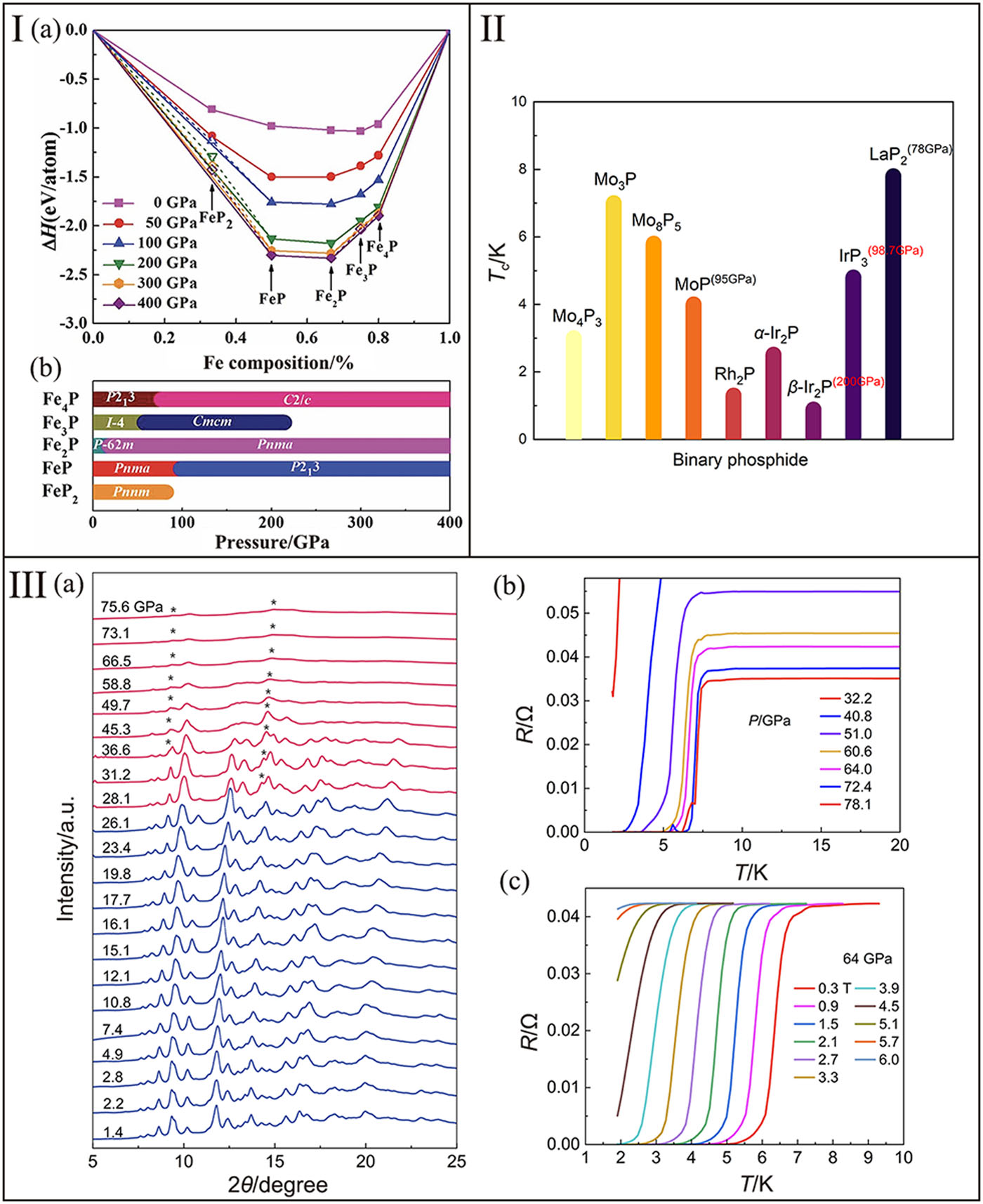
| [21] |
X. Ding, Y. Fan, X. Wang, C. Li, Z. An et al., “Cuprate-like electronic structures in infinite-layer nickelates with substantial hole dopings,” Natl. Sci. Rev. 11, nwae194 (2024).10.1093/nsr/nwae194
|
| [22] |
V. L. Deringer, C. J. Pickard, and D. M. Proserpio, “Hierarchically structured allotropes of phosphorus from data‐driven exploration,” Angew. Chem., Int. Ed. 59, 15880–15885 (2020).10.1002/anie.202005031
|
| [23] |
D. E. C. Corbridge, Phosphorus: Chemistry, Biochemistry and Technology (CRC Press, Boca Raton, FL, 2016).
|
| [24] |
M. Llunell, S. Alvarez, P. Alemany, and R. Hoffmann, “Electronic structure, bonding, and electrical properties of MoNiP8,” Inorg. Chem. 35, 4683–4689 (1996).10.1021/ic9601955
|
| [25] |
S. Rundqvist, S. Forsén, B. Gestblom, S. Gronowitz, R. A. Hoffman et al., “The crystal structure of Mo4P3,” Acta Chem. Scand. 19, 393–400 (1965).10.3891/acta.chem.scand.19-0393
|
| [26] |
K. Cao, X.-X. Qu, H. Jiang, Y.-H. Su, C. Zhang et al., “Pressure-induced novel stable stoichiometries in molybdenum-phosphorus phase diagrams under pressure,” J. Phys. Chem. C 123, 30187–30197 (2019).10.1021/acs.jpcc.9b09466
|
| [27] |
I. Shirotani, I. Kaneko, M. Takaya, C. Sekine, and T. Yagi, “Superconductivity of molybdenum phosphides prepared at high pressure,” Physica B 281–282, 1024–1025 (2000).10.1016/s0921-4526(99)00894-7
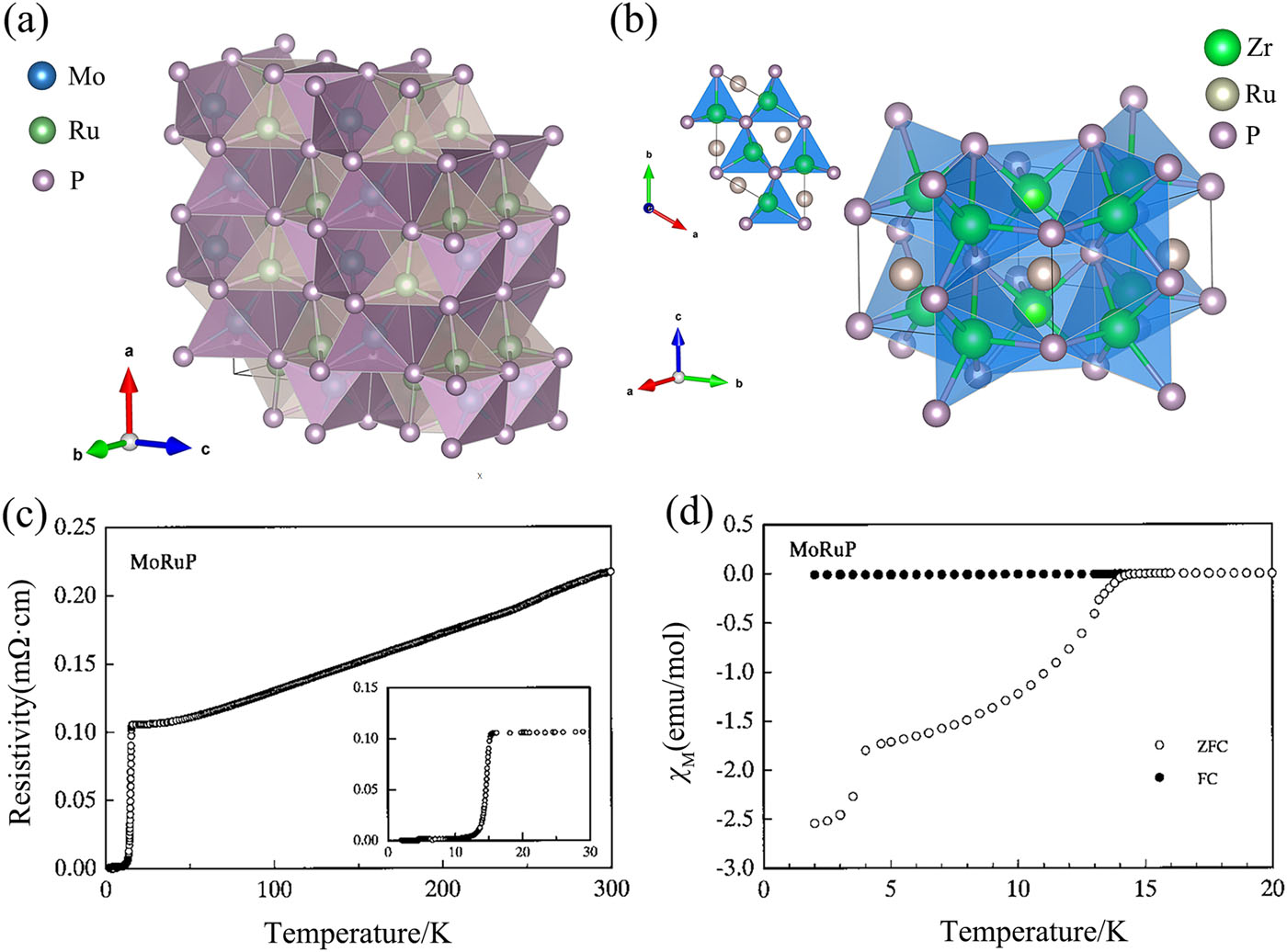
|
| [28] |
X. Liu, Z. Yu, J. Li, Z. Xu, C. Zhou et al., “A new transition metal diphosphide α-MoP2 synthesized by a high-temperature and high-pressure technique,” Chin. Phys. B 32, 018102 (2023).10.1088/1674-1056/ac633d
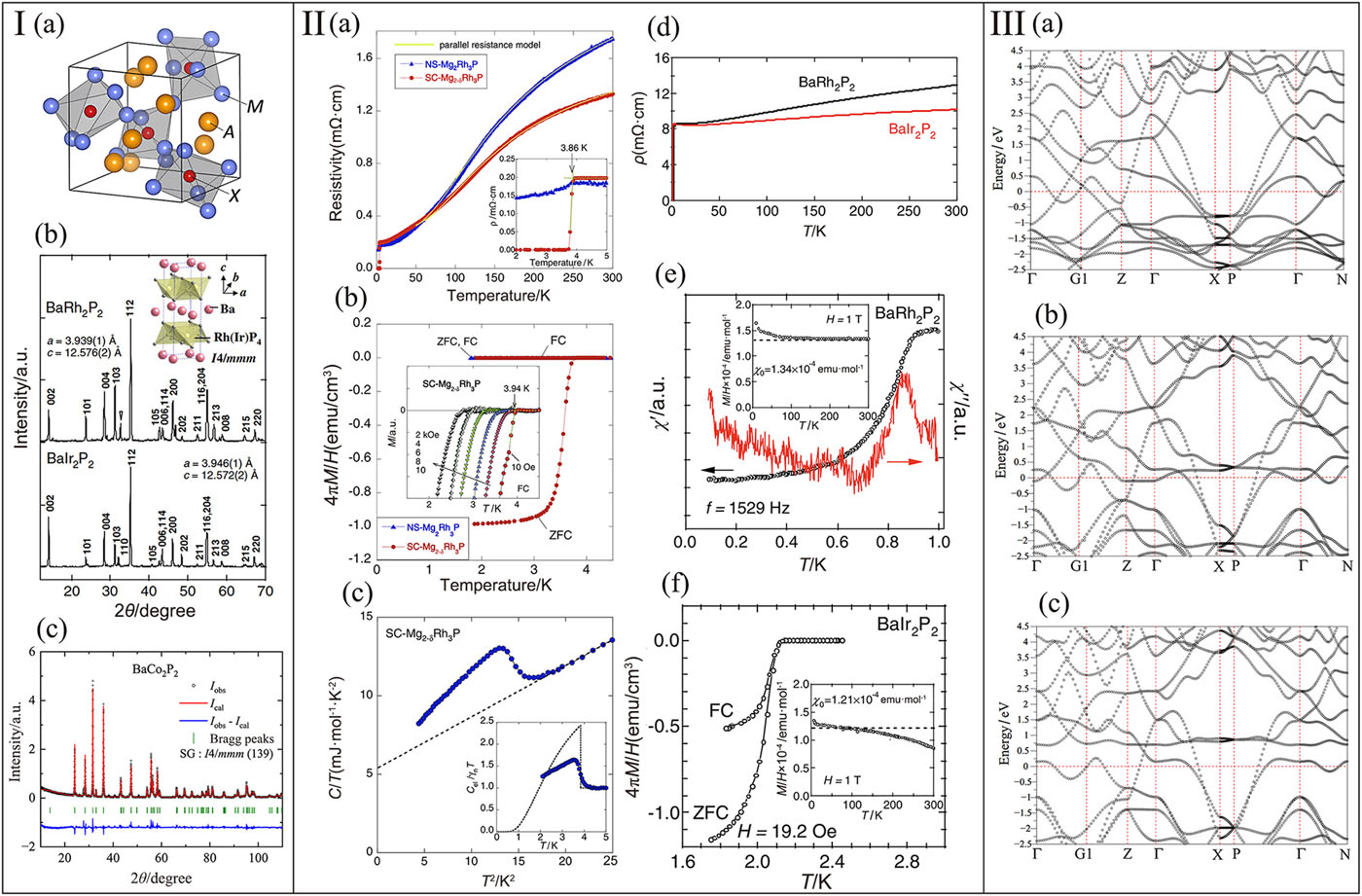
|
| [29] |
S. Rundqvist and T. Lundström, “X-ray studies of molybdenum and tungsten phosphides,” Acta Chem. Scand. 17, 37–46 (1963).10.3891/acta.chem.scand.17-0037
|
| [30] |
A. O. Oliynyk, Y. F. Lomnytska, M. V. Dzevenko, S. S. Stoyko, and A. Mar, “Phase equilibria in the Mo–Fe–P system at 800 °C and structure of ternary phosphide (Mo1−xFex)3P (0.10 ≤ x ≤ 0.15),” Inorg. Chem. 52, 983–991 (2013).10.1021/ic302243p
|
| [31] |
T. Johnsson et al., “The crystal structure of Mo8P5 from twin-crystal data,” Acta Chem. Scand. 26, 365–382 (1972).10.3891/acta.chem.scand.26-0365
|
| [32] |
Z. Chi, X. Chen, C. An, L. Yang, J. Zhao et al., “Pressure-induced superconductivity in MoP,” npj Quantum Mater. 3, 28 (2018).10.1038/s41535-018-0102-7
|
| [33] |
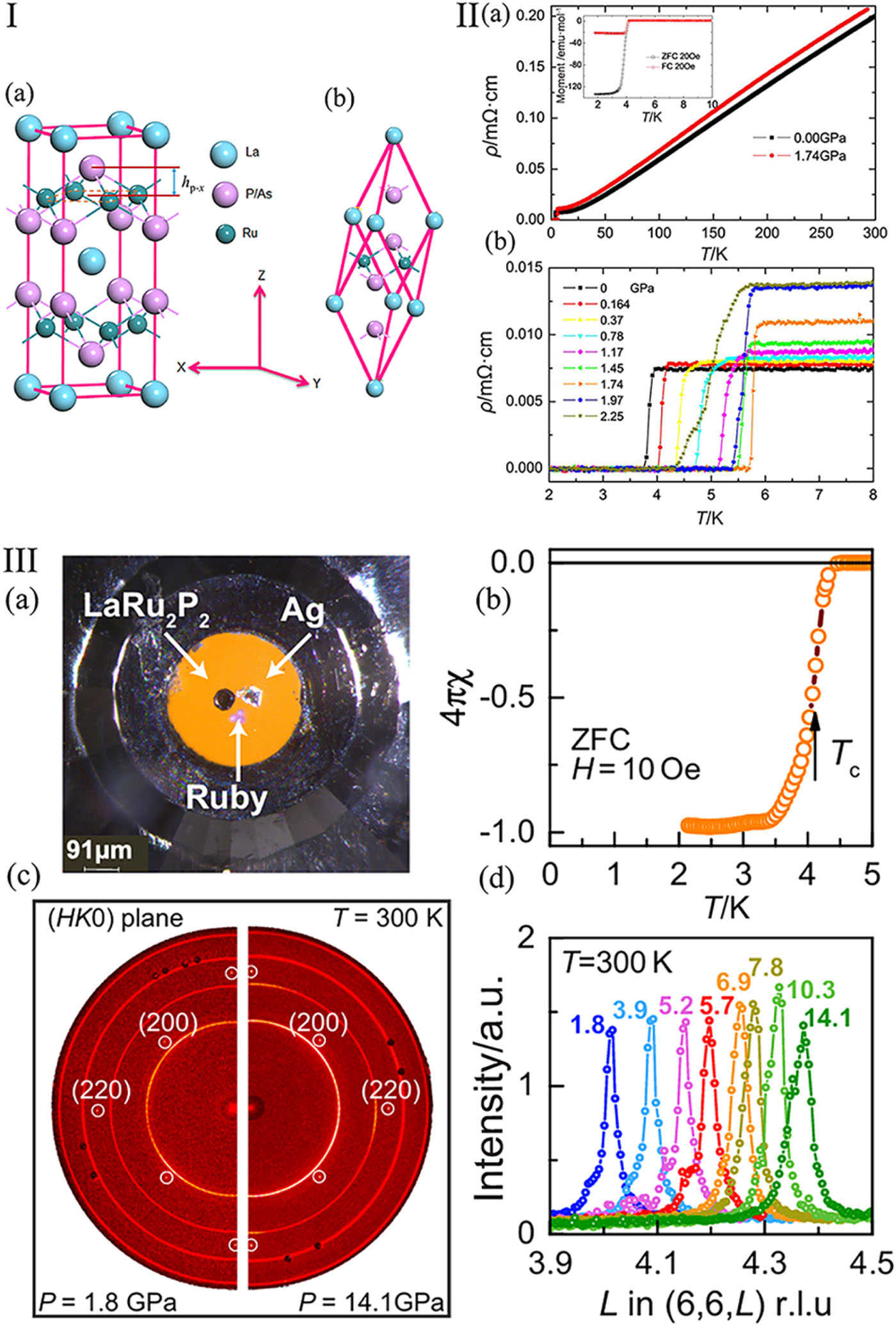
M. Zumbusch, “Über die strukturen des uransubsulfids und der subphosphide des iridiums und rhodiums,” Z. Anorg. Allg. Chem. 243, 322–329 (1940).10.1002/zaac.19402430403
|
| [34] |
Ch. J. Raub, W. H. Zachariasen, T. H. Geballe, and B. T. Matthias, “Superconductivity of some new Pt-metal compounds,” J. Phys. Chem. Solids 24, 1093–1100 (1963).10.1016/0022-3697(63)90022-2
|
| [35] |
E. H. El Ghadraoui, R. Guerin, and M. Sergent, “Diphosphure de trirhodium, Rh3P2: Premier exemple d’une structure lacunaire ordonnée de type anti-PbFCl,” Acta Crystallogr., Sect. C: Cryst. Struct. Commun. 39, 1493–1494 (1983).10.1107/s0108270183009002
|
| [36] |
S. Rundqvist, A. Hede et al., “The crystal structure of Rh4P3,” Acta Chem. Scand. 14, 893–902 (1960).10.3891/acta.chem.scand.14-0893
|
| [37] |
R. Ruehl and W. Jeitschko, “Preparation and crystal structure of dirhenium pentaphosphide, Re2P5, a diamagnetic semiconducting polyphosphide with rhomboidal Re4 clusters,” Inorg. Chem. 21, 1886–1891 (1982).10.1021/ic00135a036
|
| [38] |
W. Jeitschko and R. Rühl, “Synthesis and crystal structure of diamagnetic ReP4, a polyphosphide with Re–Re pairs,” Acta Crystallogr., Sect. B: Struct. Sci., Cryst. Eng. Mater. 35, 1953–1958 (1979).10.1107/S0567740879008232
|
| [39] |
S. V. Orishchin, V. S. Babizhetskii, and Yu. B. Kuz’ma, “Preparation and structure of Re3P4 crystals,” Inorg. Mater. 34, 1227–1230 (1998).
|
| [40] |
S. B. Schneider, D. Baumann, A. Salamat, Z. Konôpková, H. P. Liermann et al., “Materials properties of ultra-incompressible Re2P,” Chem. Mater. 24, 3240–3246 (2012).10.1021/cm3016885
|
| [41] |
P. Wang, Y. Wang, L. Wang, X. Zhang, X. Yu et al., “Elastic, magnetic and electronic properties of iridium phosphide Ir2P,” Sci. Rep. 6, 21787 (2016).10.1038/srep21787
|
| [42] |
X. Li, X. Ma, W. Gao, and Y. Liu, “Evolution of crystal structures and electronic properties for Ir2P under high pressure,” Chin. J. High Pressure Phys. 33, 011103 (2019).10.11858/gywlxb.20180645.
|
| [43] |
C. Pei, T. Ying, Q. Zhang, X. Wu, T. Yu et al., “Caging-pnictogen-induced superconductivity in skutterudites IrX3 (X = As, P),” J. Am. Chem. Soc. 144, 6208–6214 (2022).10.1021/jacs.1c09244
|
| [44] |
R. Kaner, C. A. Castro, R. P. Gruska, and A. Wold, “Preparation and characterization of the platinum metal phosphides RuP2 and IrP2,” Mater. Res. Bull. 12, 1143–1147 (1977).10.1016/0025-5408(77)90167-2
|
| [45] |
B. Q. Lv, Z. L. Feng, Q. N. Xu, X. Gao, J. Z. Ma et al., “Observation of three-component fermions in the topological semimetal molybdenum phosphide,” Nature 546, 627–631 (2017).10.1038/nature22390
|
| [46] |
J. Chen, “Unconventional superconductivity in the topological semimetal MoP: Evidence from first-principles calculated electron-phonon coupling,” Comput. Mater. Sci. 173, 109466 (2020).10.1016/j.commatsci.2019.109466
|
| [47] |
G. Autès, D. Gresch, M. Troyer, A. A. Soluyanov, and O. V. Yazyev, “Robust type-II Weyl semimetal phase in transition metal diphosphides XP2 (X = Mo, W),” Phys. Rev. Lett. 117, 066402 (2016).10.1103/physrevlett.117.066402
|
| [48] |
A. Wang, D. Graf, A. Stein, Y. Liu, W. Yin et al., “Magnetotransport properties of MoP2,” Phys. Rev. B 96, 195107 (2017).10.1103/physrevb.96.195107
|
| [49] |
X.-H. Tu, T. Bo, P.-F. Liu, W. Yin, N. Hao et al., “Superconductivity in Mo–P compounds under pressure and in double-Weyl semimetal Hex-MoP2,” Phys. Chem. Chem. Phys. 24, 7893–7900 (2022).10.1039/d1cp05685a
|
| [50] |
D. Jin, X. Yao, P. Li, Z. Tian, and Y. Liu, “Properties of RhP predicted by first-principles,” Phys. Lett. A 384, 126426 (2020).10.1016/j.physleta.2020.126426
|
| [51] |
R. Rühl, U. Flörke, and W. Jeitschko, “Crystal growth, properties, and structure refinements of some rhenium phosphides and arsenophosphides,” J. Solid State Chem. 53, 55–63 (1984).10.1016/0022-4596(84)90227-5
|
| [52] |
S. Rundqvist et al., “The crystal structure of Re3P4,” Acta Chem. Scand. 20, 2075–2080 (1966).10.3891/acta.chem.scand.20-2075.
|
| [53] |
S. Rundqvist, “Phosphides of the platinum metals,” Nature 185, 31–32 (1960).10.1038/185031a0
|
| [54] |
C. M. Sweeney, K. L. Stamm, and S. L. Brock, “On the feasibility of phosphide generation from phosphate reduction: The case of Rh, Ir, and Ag,” J. Alloys Compd. 448, 122–127 (2008).10.1016/j.jallcom.2006.10.035
|
| [55] |
X. Ma, X. Li, D. Zhou, J. Xu, W. Gao et al., “Phase diagram and bonding states of Ir-P binary compounds at high pressures,” J. Alloys Compd. 791, 1257–1262 (2019).10.1016/j.jallcom.2019.03.051
|
| [56] |
X. W. Sun, M. R. Chen, X. L. Dou, N. Li, T. Wang et al., “A theoretical investigation on the structural stability, superconductivity, and optical and thermodynamic properties of Ir2P under pressure,” RSC Adv. 14, 1216–1228 (2024).10.1039/d3ra07464a
|
| [57] |
M. Llunell, P. Alemany, S. Alvarez, V. P. Zhukov, and A. Vernes, “Electronic structure and bonding in skutterudite-type phosphides,” Phys. Rev. B 53, 10605 (1996).10.1103/physrevb.53.10605
|
| [58] |
H. Okamoto, “The Fe-P (iron-phosphorus) system,” Bull. Alloy Phase Diagrams 11, 404–412 (1990).10.1007/bf02843320
|
| [59] |
A. I. Zaitsev, Zh. V. Dobrokhotova, A. D. Litvina, and B. M. Mogutnov, “Thermodynamic properties and phase equilibria in the Fe–P system,” J. Chem. Soc., Faraday Trans. 91, 703–712 (1995).10.1039/ft9959100703.
|
| [60] |
J. Wu, X. Chong, R. Zhou, Y. Jiang, and J. Feng, “Structure, stability, mechanical and electronic properties of Fe–P binary compounds by first-principles calculations,” RSC Adv. 5, 81943–81956 (2015).10.1039/c5ra09875k
|
| [61] |
Z. Zhao, L. Liu, S. Zhang, T. Yu, F. Li et al., “Phase diagram, stability and electronic properties of an Fe–P system under high pressure: A first principles study,” RSC Adv. 7, 15986–15991 (2017).10.1039/c7ra01567d
|
| [62] |
M. Zhang, C. Pei, B. Zhu, Q. Wang, J. Wu et al., “Pressure-induced superconductivity in LaP2 with a graphenelike phosphorus layer,” Phys. Rev. B 112, 184108 (2025).10.1103/t445-8hck
|
| [63] |
Z. Yang, L. Liu, X. Wang, S. Yang, and X. Su, “Stability and electronic structure of the Co–P compounds from first-principle calculations,” J. Alloys Compd. 509, 165–171 (2011).10.1016/j.jallcom.2010.09.018
|
| [64] |
C. Schmetterer, J. Vizdal, and H. Ipser, “A new investigation of the system Ni–P,” Intermetallics 17, 826–834 (2009).10.1016/j.intermet.2009.03.011
|
| [65] |
D. J. Braun and W. Jeitschko, “Über polyphosphide von chrom, mangan, ruthenium und osmium. Synthese und kristallstruktur von RuP4 und OsP4,” Z. Anorg. Allg. Chem. 445, 157–166 (1978).10.1002/zaac.19784450120
|
| [66] |
W. Hönle, R. Kremer, and H. G. v. Schnering, “Ruthenium(III)triphosphide RuP3: Preparation, crystal structure and properties,” Z. Kristallogr. - Cryst. Mater. 179, 443–454 (1987).10.1524/zkri.1987.179.14.443
|
| [67] |
G. P. Felcher, F. A. Smith, D. Bellavance, and A. Wold, “Magnetic structure of iron monophosphide,” Phys. Rev. B 3, 3046 (1971).10.1103/physrevb.3.3046
|
| [68] |
I. O. Chernyavskii, S. E. Nikitin, Y. A. Onykiienko, D. S. Inosov, Q. Stahl et al., “Incommensurate magnet iron monophosphide FeP: Crystal growth and characterization,” Phys. Rev. Mater. 4, 083403 (2020).10.1103/physrevmaterials.4.083403
|
| [69] |
O. Eriksson, J. Sjöström, B. Johansson, L. Häggström, and H. L. Skriver, “Itinerant ferromagnetism in Fe2P,” J. Magn. Magn. Mater. 74, 347–358 (1988).10.1016/0304-8853(88)90210-7
|
| [70] |
R. Fruchart, A. Roger, and J. P. Senateur, “Crystallographic and magnetic properties of solid solutions of the phosphides M2P, M = Cr, Mn, Fe, Co, and Ni,” J. Appl. Phys. 40, 1250–1257 (1969).10.1063/1.1657617
|
| [71] |
S. Fujii, S. Ishida, and S. Asano, “Electronic structures and magnetic properties of Fe2P, Co2P and CoMnP,” J. Phys. F: Met. Phys. 18, 971–980 (1988).10.1088/0305-4608/18/5/014
|
| [72] |
H. Hou, Q. Yang, C. Tan, G. Ji, B. Gu et al., “One-pot solution-phase synthesis of paramagnetic Co2P nanorods,” Chem. Lett. 33, 1272–1273 (2004).10.1246/cl.2004.1272
|
| [73] |
J. Wang, Q. Yang, Z. Zhang, and S. Sun, “Phase‐controlled synthesis of transition‐metal phosphide nanowires by Ullmann‐type reactions,” Chem. - Eur. J. 16, 7916–7924 (2010).10.1002/chem.200902151
|
| [74] |
S. Ishida, S. Asano, and J. Ishida, “Electronic structures and magnetic properties of T2P (T = Mn, Fe, Ni),” J. Phys. F: Met. Phys. 17, 475–482 (1987).10.1088/0305-4608/17/2/016
|
| [75] |
K. Zeppenfeld and W. Jeitschko, “Magnetic behaviour of Ni3P Ni2P, NiP3 and the series Ln2Ni12P7 (Ln = Pr, Nd, Sm, Gd-Lu),” J. Phys. Chem. Solids 54, 1527–1531 (1993).10.1016/0022-3697(93)90346-s
|
| [76] |
N. Takeda, T. Nakajo, H. Ono, K. Tatematsu, and T. Nakano, “Physical properties of unfilled skutterudite NiP3,” J. Phys. Soc. Jpn. 80, SA035 (2011).10.1143/jpsjs.80sa.sa035
|
| [77] |
D. Ootsuki, K. Sawada, H. Goto, D. Hirai, D. Shibata et al., “Observation of metal to nonmagnetic insulator transition in polycrystalline RuP by photoemission spectroscopy,” Phys. Rev. B 101, 165113 (2020).10.1103/physrevb.101.165113
|
| [78] |
H. Goto, T. Toriyama, T. Konishi, and Y. Ohta, “Novel electronic structures of Ru-pnictides RuPn (Pn = P, As, Sb),” Phys. Procedia 75, 91–99 (2015).10.1016/j.phpro.2015.12.013
|
| [79] |
R. J. Koch, N. Aryal, O. Ivashko, Y. Liu, M. Abeykoon et al., “Fluctuating Ru trimer precursor to a two-stage electronic transition in RuP,” Phys. Rev. B 106, 214516 (2022).10.1103/physrevb.106.214516
|
| [80] |
D. Hirai, K. Kojima, N. Katayama, M. Kawamura, D. Nishio-Hamane et al., “Linear trimer molecule formation by three-center–four-electron bonding in a crystalline solid rup,” J. Am. Chem. Soc. 144, 17857–17864 (2022).10.1021/jacs.2c06173
|
| [81] |
H. Barz, H. C. Ku, G. P. Meisner, Z. Fisk, and B. T. Matthias, “Ternary transition metal phosphides: High-temperature superconductors,” Proc. Natl. Acad. Sci. U. S. A. 77, 3132–3134 (1980).10.1073/pnas.77.6.3132
|
| [82] |
I. Shirotani, M. Takaya, I. Kaneko, C. Sekine, and T. Yagi, “Superconductivity of MRuP and MNiP (M = Mo or W) prepared at high pressure,” Solid State Commun. 116, 683–686 (2000).10.1016/s0038-1098(00)00393-8
|
| [83] |
H. Kitô, T. Wada, and H. Abe, “Intermetallic compound MoIrP related with MoRuP and MoNiP superconductor,” Physica B 378–380, 1146–1147 (2006).10.1016/j.physb.2006.01.459
|
| [84] |
W. Wong Ng, W. Y. Ching, Y. N. Xu, J. A. Kaduk, I. Shirotani et al., “Structure and electronic properties of the orthorhombic MoRuP superconductor prepared at high pressure,” Phys. Rev. B 67, 144523 (2003).10.1103/PhysRevB.67.144523
|
| [85] |
A. Iyo, I. Hase, H. Fujihisa, Y. Gotoh, N. Takeshita et al., “Superconductivity induced by Mg deficiency in noncentrosymmetric phosphide Mg2Rh3P,” Phys. Rev. Mater. 3, 124802 (2019).10.1103/physrevmaterials.3.124802
|
| [86] |
D. Hirai, T. Takayama, R. Higashinaka, H. Aruga Katori, and H. Takagi, “Superconductivity in layered pnictides BaRh2P2 and BaIr2P2,” J. Phys. Soc. Jpn. 78, 023706 (2009).10.1143/jpsj.78.023706
|
| [87] |
N. Berry, C. Capan, G. Seyfarth, A. D. Bianchi, J. Ziller et al., “Superconductivity without Fe or Ni in the phosphides BaIr2P2 and BaRh2P2,” Phys. Rev. B 79, 180502 (2009).10.1103/physrevb.79.180502
|
| [88] |
S. Huyan, J. Schmidt, A. Valadkhani, H. Wang, Z. Li et al., “Near-room-temperature ferromagnetic ordering in the pressure-induced collapsed-tetragonal phase in SrCo2P2,” Phys. Rev. B 112, L041102 (2025).10.1103/vl33-53qm
|
| [89] |
A. Van Der Spuy, R. Warmbier, and A. Pandey, “Existence of a flat band in highly correlated metal BaCo2P2,” J. Phys.: Condens. Matter 37, 155602 (2025).10.1088/1361-648x/adb675.
|
| [90] |
I. Hase, T. Yanagisawa, A. Iyo, H. Fujihisa, Y. Goto et al., “Electronic structure of novel non-centrosymmetric superconductor Mg2Rh3P,” J. Phys.: Conf. Ser. 1293, 012028 (2019).10.1088/1742-6596/1293/1/012028
|
| [91] |
E. Karaca, H. M. Tütüncü, G. P. Srivastava, and S. Uǧur, “Electron-phonon superconductivity in the ternary phosphides BaM2P2 (M = Ni, Rh, and Ir),” Phys. Rev. B 94, 054507 (2016).10.1103/PhysRevB.94.054507
|
| [92] |
W. Jeitschko and M. Reehuis, “Magnetic properties of CaNi2P2 and the corresponding lanthanoid nickel phosphides with ThCr2Si2 type structure,” J. Phys. Chem. Solids 48, 667–673 (1987).10.1016/0022-3697(87)90157-0
|
| [93] |
Z. Ban and M. Sikirica, “The crystal structure of ternary silicides ThM2Si2 (M = Cr, Mn, Fe, Co, Ni and Cu),” Acta Crystallogr. 18, 594–599 (1965).10.1107/s0365110x6500141x
|
| [94] |
G. Just and P. Paufler, “On the coordination of ThCr2Si2 (BaAl4)-type compounds within the field of free parameters,” J. Alloys Compd. 232, 1–25 (1996).10.1016/0925-8388(95)01939-1
|
| [95] |
M. Z. Rahaman and M. A. Rahman, “ThCr2Si2-type Ru-based superconductors LaRu2M2 (M = P and As): An ab-initio investigation,” J. Alloys Compd. 695, 2827–2834 (2017).10.1016/j.jallcom.2016.11.418
|
| [96] |
J. J. Ying, Y. J. Yan, R. H. Liu, X. F. Wang, A. F. Wang et al., “Isotropic superconductivity in LaRu2P2 with the ThCr2Si2-type structure,” Supercond. Sci. Technol. 23, 115009 (2010).10.1088/0953-2048/23/11/115009
|
| [97] |
T. Fujiwara, K. Kanto, K. Matsubayashi, Y. Uwatoko, and T. Shigeoka, “Electrical transport properties of ternary phosphides RRu2P2 (R = La, Ce, Pr and Eu) with ThCr2Si2 type crystal structure,” J. Phys.: Conf. Ser. 273, 012112 (2011).10.1088/1742-6596/273/1/012112
|
| [98] |
N. Foroozani, J. Lim, J. Schilling, R. Fotovat, C. Zheng et al., “Hydrostatic high-pressure studies to 25 GPa on the model superconducting pnictide LaRu2P2,” J. Phys.: Conf. Ser. 500, 032007 (2014).10.1088/1742-6596/500/3/032007
|
| [99] |
B. Li, P. Lu, J. Liu, J. Sun, S. Li et al., “Pressure induced enhancement of superconductivity in LaRu2P2,” Sci. Rep. 6, 24479 (2016).10.1038/srep24479
|
| [100] |
M. Fernández Lomana, V. Barrena, B. Wu, S. Delgado, F. Mompeán et al., “Large magnetoresistance in the iron-free pnictide superconductor LaRu2P2,” J. Phys.: Condens. Matter 33, 145501 (2021).10.1088/1361-648X/abdbea
|
| [101] |
H. Okabe, N. Takeshita, K. Horigane, T. Muranaka, and J. Akimitsu, “Pressure-induced high-Tc superconducting phase in FeSe: Correlation between anion height and Tc,” Phys. Rev. B 81, 205119 (2010).10.1103/physrevb.81.205119
|
| [102] |
P. Mele, “Superconducting properties of iron chalcogenide thin films,” Sci. Technol. Adv. Mater. 13, 054301 (2012).10.1088/1468-6996/13/5/054301
|
| [103] |
M. F. Hansen, J.-B. Vaney, C. Lepoittevin, F. Bernardini, E. Gaudin et al., “Superconductivity in the crystallogenide LaFeSiO1−δ with squeezed FeSi layers,” npj Quantum Mater. 7, 86 (2022).10.1038/s41535-022-00493-z
|
| [104] |
G. Drachuck, A. Sapkota, W. T. Jayasekara, K. Kothapalli, S. L. Bud’ko et al., “Collapsed tetragonal phase transition in LaRu2P2,” Phys. Rev. B 96, 184509 (2017).10.1103/physrevb.96.184509
|
| [105] |
P. J. W. Moll, J. Kanter, R. D. McDonald, F. Balakirev, P. Blaha et al., “Quantum oscillations of the superconductor LaRu2P2: Comparable mass enhancement λ ≈ 1 in Ru and Fe phosphides,” Phys. Rev. B 84, 224507 (2011).10.1103/physrevb.84.224507
|
| [106] |
E. Razzoli, M. Kobayashi, V. N. Strocov, B. Delley, Z. Bukowski et al., “Bulk electronic structure of superconducting LaRu2P2 single crystals measured by soft-X-ray angle-resolved photoemission spectroscopy,” Phys. Rev. Lett. 108, 257005 (2012).10.1103/physrevlett.108.257005
|
| [107] |
M. Fernández-Lomana, P. O. Aguilera, B. Wu, E. Herrera, H. Suderow et al., “Superconducting density of states and vortex lattice of LaRu2P2 observed by scanning tunneling spectroscopy,” J. Phys.: Condens. Matter 37, 025604 (2024).10.1088/1361-648X/ad82c9
|
| [108] |
J. U. Rehman, M. A. Rehman, M. Usman, M. B. Tahir, A. Hussain et al., “First-principles calculations to investigate structural, electronics, optical and mechanical properties of LaRu2P2 compound for superconducting application,” Mol. Simul. 49, 76–84 (2022).10.1080/08927022.2022.2124297
|
| [109] |
W. Ren, H. Mei, W. Sang, M. Tan, J. Si et al., “Raman scattering study of electron-phonon coupling in superconducting LaRu2P2,” Phys. Rev. B 110, 144504 (2024).10.1103/physrevb.110.144504
|
| [110] |
T. Ichibha, R. Maezono, and K. Hongo, “Ab initio screening for BCS-type superconductivity in ThCr2Si2-type compounds,” Phys. Scr. 100, 085969 (2025).10.1088/1402-4896/adf420
|
Figures(9) / Tables(1)






 DownLoad: