| Citation: | Rafael Ramis. 3D radiation-hydrodynamics simulations of octahedral spherical hohlraums[J]. Matter and Radiation at Extremes, 2026, 11(2): 027601. doi: 10.1063/5.0291101

|

| [1] |
J. H. Nuckolls, L. Wood, A. Thiessen, and G. B. Zimmermann, “Laser compression of matter to super-high densities: Thermonuclear (CTR) applications,” Nature 239, 139–142 (1972).10.1038/239139a0.
|
| [2] |
S. Atzeni and J. Meyer-ter-Vehn, The Physics of Inertial Fusion (Oxford Science Publications, Oxford, 2004), pp. 1–480.
|
| [3] |
J. Lindl, “Development of the indirect-drive approach to inertial confinement fusion and the target physics basis for ignition and gain,” Phys. Plasmas 2, 3933 (1995).10.1063/1.871025
|
| [4] |
S. W. Haan, J. D. Lindl, D. A. Callahan, D. S. Clark, J. D. Salmonson et al., “Point design targets, specifications, and requirements for the 2010 ignition campaign on the National Ignition Facility,” Phys. Plasmas 18, 051001 (2011).10.1063/1.3592169
|
| [5] |
H. Abu-Shawareb, R. Acree, P. Adams, J. Adams, B. Addis et al., “Achievement of target gain larger than unity in an inertial fusion experiment,” Phys. Rev. Lett. 132, 065102 (2024).10.1103/physrevlett.132.065102
|
| [6] |
A. L. Kritcher, D. J. Schlossberg, C. R. Weber, C. V. Young, O. A. Hurricane et al., “Design of first experiment to achieve fusion target gain > 1,” Phys. Plasmas 31, 070502 (2024).10.1063/5.0210904
|
| [7] |
K. Lan, J. Liu, D. Lai, W. Zheng, and X.-T. He, “High flux symmetry of the spherical hohlraum with octahedral 6LEHs at the hohlraum-to-capsule radius ratio of 5.14,” Phys. Plasmas 21, 010704 (2014).10.1063/1.4863435
|
| [8] |
K. Lan, X.-T. He, J. Liu, W. Zheng, and D. Lai, “Octahedral spherical hohlraum and its laser arrangement for inertial fusion,” Phys. Plasmas 21, 052704 (2014).10.1063/1.4878835
|
| [9] |
K. Lan and W. Zheng, “Novel spherical hohlraum with cylindrical laser entrance holes and shields,” Phys. Plasmas 21, 090704 (2014).10.1063/1.4895503
|
| [10] |
K. Lan, J. Liu, Z. Li, X. Xie, W. Huo et al., “Progress in octahedral spherical hohlraum study,” Matter Radiat. Extremes 1, 8–27 (2016).10.1016/j.mre.2016.01.003
|
| [11] |
K. Lan, “Dream fusion in octahedral spherical hohlraum,” Matter Radiat. Extremes 7, 055701 (2022).10.1063/5.0103362
|
| [12] |
R. K. Follett, J. G. Shaw, J. F. Myatt, V. N. Goncharov, D. H. Edgell et al., “Ray-based modeling of cross-beam energy transfer at caustics,” Phys. Rev. E 98, 043202 (2018).10.1103/physreve.98.043202
|
| [13] |
K. Lan, Z. Li, X. Xie, Y.-H. Chen, C. Zheng et al., “Experimental demonstration of low laser-plasma instabilities in gas-filled spherical hohlraums at laser injection angle designed for ignition target,” Phys. Rev. E 95, 031202(R) (2017).10.1103/physreve.95.031202
|
| [14] |
R. Ramis, “Hydrodynamic analysis of laser-driven cylindrical implosions,” Phys. Plasmas 20, 082705 (2013).10.1063/1.4818801
|
| [15] |
R. Ramis, M. Temporal, B. Canaud, and V. Brandon, “Three-dimensional symmetry analysis of a direct-drive irradiation scheme for the laser megajoule facility,” Phys. Plasmas 21, 082710 (2014).10.1063/1.4893311
|
| [16] |
R. Ramis, B. Canaud, M. Temporal, W. J. Garbett, and F. Philippe, “Analysis of three-dimensional effects in laser driven thin-shell capsule implosions,” Matter Radiat. Extremes 4, 055402 (2019).10.1063/1.5095612
|
| [17] |
M. F. Modest, Radiative Heat Transfer, 3rd ed. (Academic Press; Elsevier, 2013), pp. 1–822.
|
| [18] |
G. Pomraning, The Equations of Radiation Hydrodynamics (Pergamon Press, Oxford, 1973), pp. 1–286.
|
| [19] |
H. A. Scott, J. A. Harte, M. E. Foord, and D. T. Woods, “Using tabulated NLTE data for hohlraum simulations,” Phys. Plasmas 29, 082703 (2022).10.1063/5.0102624
|
| [20] |
K. Eidmann, “Radiation transport and atomic physics modeling in high-energy-density laser-produced plasmas,” Laser Part. Beams 12, 223–244 (1994).10.1017/s0263034600007709
|
| [21] |
R. Ramis, R. Schmalz, and J. Meyer-ter-Vehn, “MULTI—A computer code for one-dimensional multigroup radiation hydrodynamics,” Comput. Phys. Commun. 49, 475–505 (1988).10.1016/0010-4655(88)90008-2
|
| [22] |
R. Ramis, J. Meyer-ter-Vehn, and J. Ramírez, “MULTI2D – a computer code for two-dimensional radiation hydrodynamics,” Comput. Phys. Commun. 180, 977–994 (2009).10.1016/j.cpc.2008.12.033
|
| [23] |
J. Meyer-ter-Vehn and R. Ramis, “On collisional free-free photon absorption in warm dense matter,” Phys. Plasmas 26, 113301 (2019).10.1063/1.5121218
|
| [24] |
E. Livne and A. Glasner, “A finite difference scheme for the heat conduction equation,” J. Comput. Phys. 58(1), 59–66 (1985).10.1016/0021-9991(85)90156-1
|
| [25] |
F. Wu, R. Ramis, and Z. Li, “A conservative MHD scheme on unstructured Lagrangian grids for Z-pinch hydrodynamic simulations,” J. Comput. Phys. 357, 206–229 (2018).10.1016/j.jcp.2017.12.014
|
| [26] |
Y. B. Zel’dovich and Y. P. Raizer, Physics of Shock Waves and High-Temperature Hydrodynamic Phenomena (Academic Press, New York, 1967), pp. 1–488.
|
| [27] |
R. E. Marshak, “Effect of radiation on shock wave behavior,” Phys. Fluids 1, 24–29 (1958).10.1063/1.1724332
|
| [28] |
A. C. A Caruso and C. S. C Strangio, “The quality of the illumination for a spherical capsule enclosed in a radiating cavity,” Jpn. J. Appl. Phys. 30, 1095–1101 (1991).10.1143/jjap.30.1095
|
| [29] |
Y. Chen, Z. Li, X. Xie, C. Zheng, C. Zhai et al., “First experimental comparisons of laser-plasma interactions between spherical and cylindrical hohlraums at SGIII laser facility,” Matter Radiat. Extremes 2, 77–86 (2017).10.1016/j.mre.2017.01.001
|
| [30] |
W. A. Farmer, J. M. Koning, D. J. Strozzi, D. E. Hinkel, L. F. Berzak Hopkins et al., “Simulation of self-generated magnetic fields in an inertial fusion hohlraum environment,” Phys. Plasmas 24, 052703 (2017).10.1063/1.4983140
|
| [31] |
W. Y. Huo, Z. Li, Y.-H. Chen, X. Xie, G. Ren et al., “First octahedral spherical hohlraum energetics experiment at the SGIII laser facility,” Phys. Rev. Lett. 120, 165001 (2018).10.1103/physrevlett.120.165001
|
| [32] |
K. Lan, Y. Dong, J. Wu, Z. Li, Y. Chen et al., “First inertial confinement fusion implosion experiment in octahedral spherical hohlraum,” Phys. Rev. Lett. 127, 245001 (2021).10.1103/physrevlett.127.245001
|
| [33] |
Y.-H. Chen, Z. Li, H. Cao, K. Pan, S. Li et al., “Determination of laser entrance hole size for ignition-scale octahedral spherical hohlraums,” Matter Radiat. Extremes 7, 065901 (2022).10.1063/5.0102447
|
| [34] |
R. Sigel, G. D. Tsakiris, F. Lavarenne, J. Massen, R. Fedosejevs et al., “Experimental observation of laser-induced radiation heat waves,” Phys. Rev. Lett. 65, 587–590 (1990).10.1103/physrevlett.65.587
|
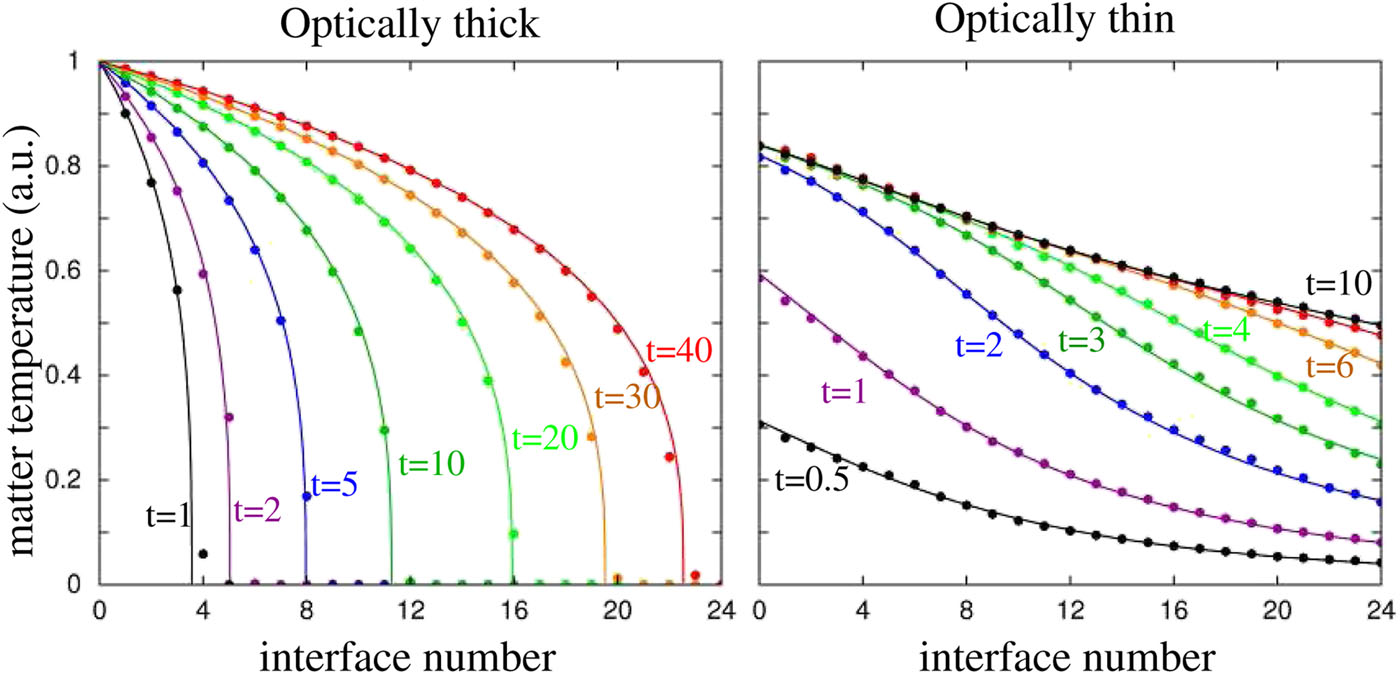
Figures(13)






 DownLoad: