2026, 11(2)
doi: 10.1063/5.0291101
Abstract:
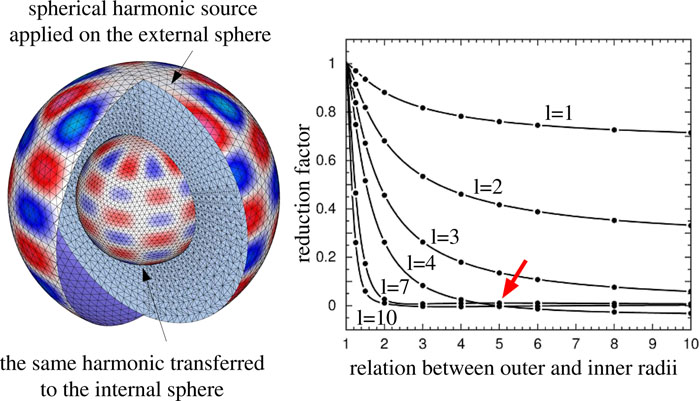
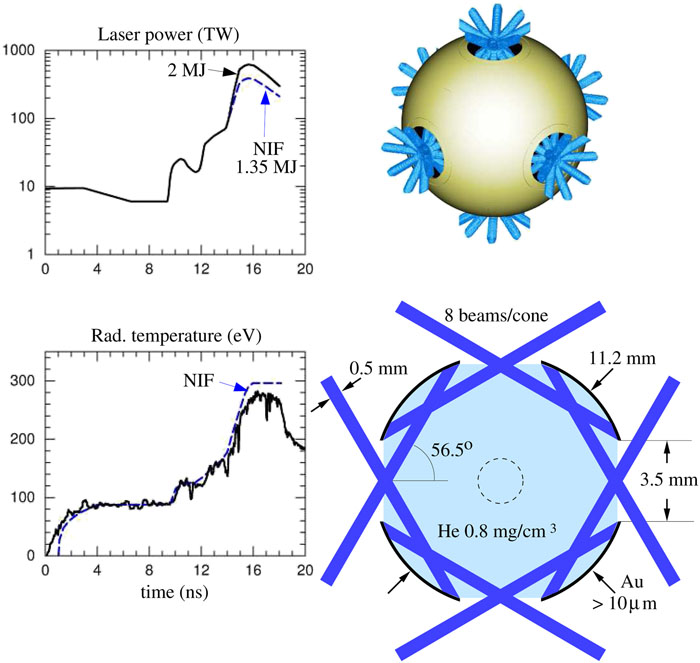
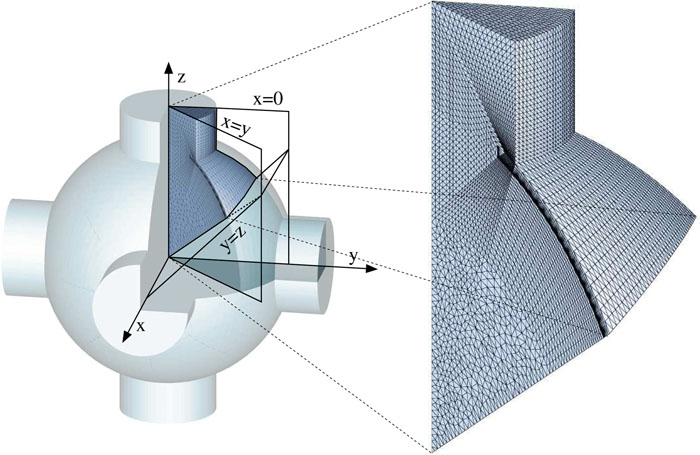
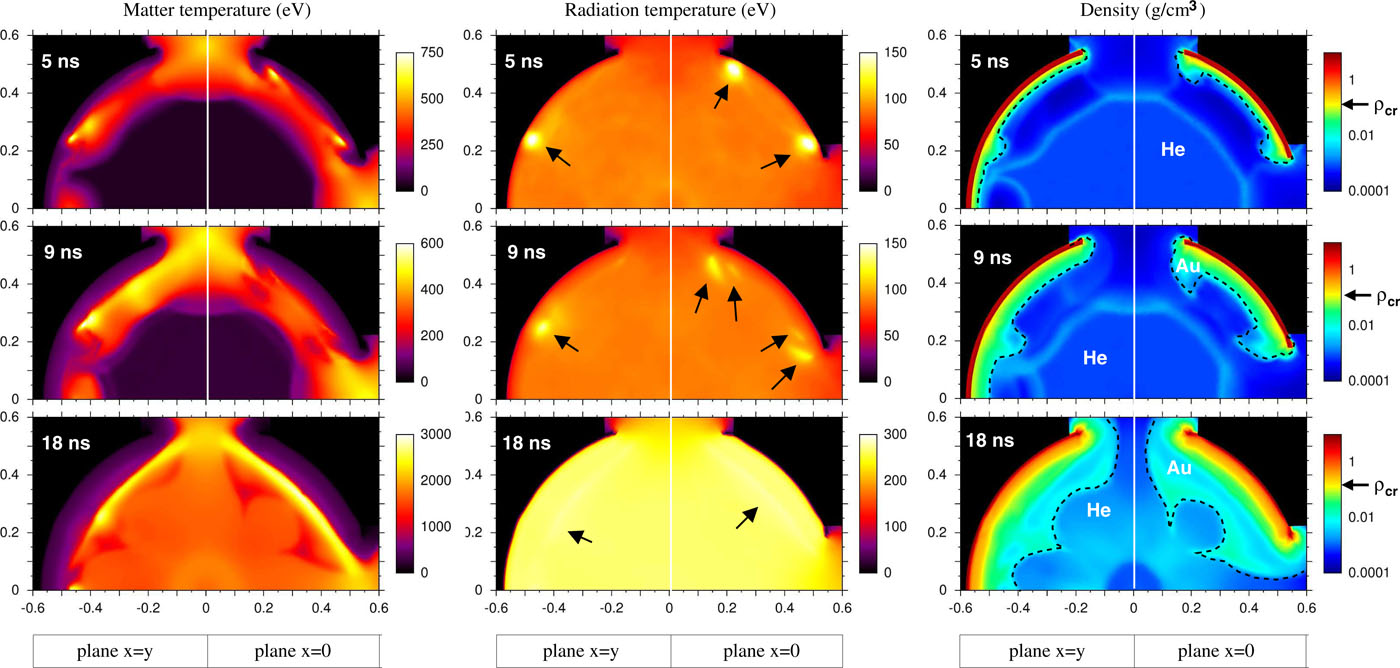
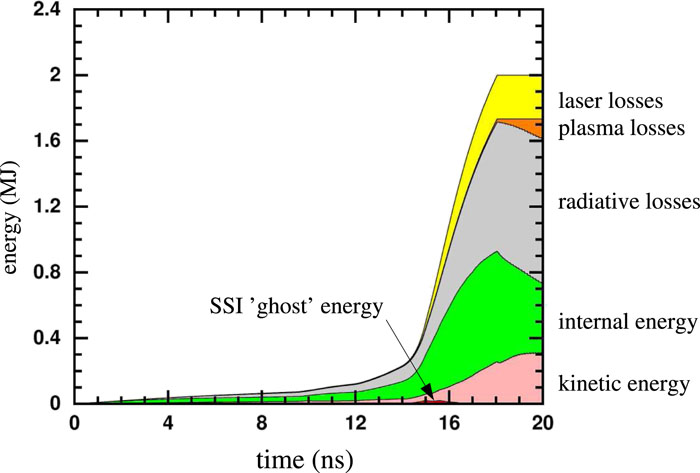
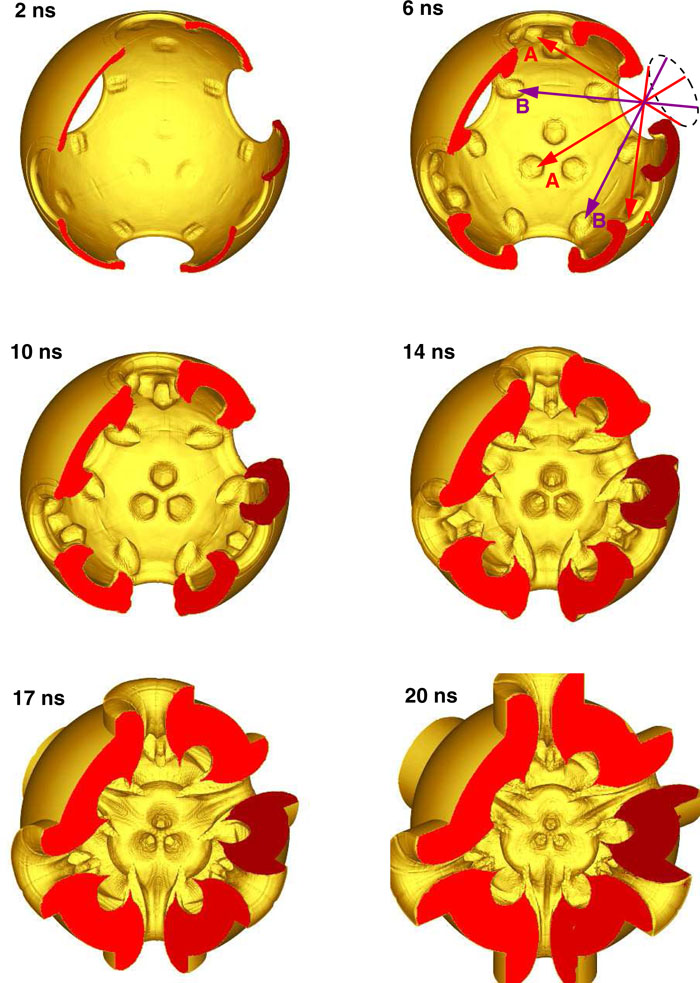
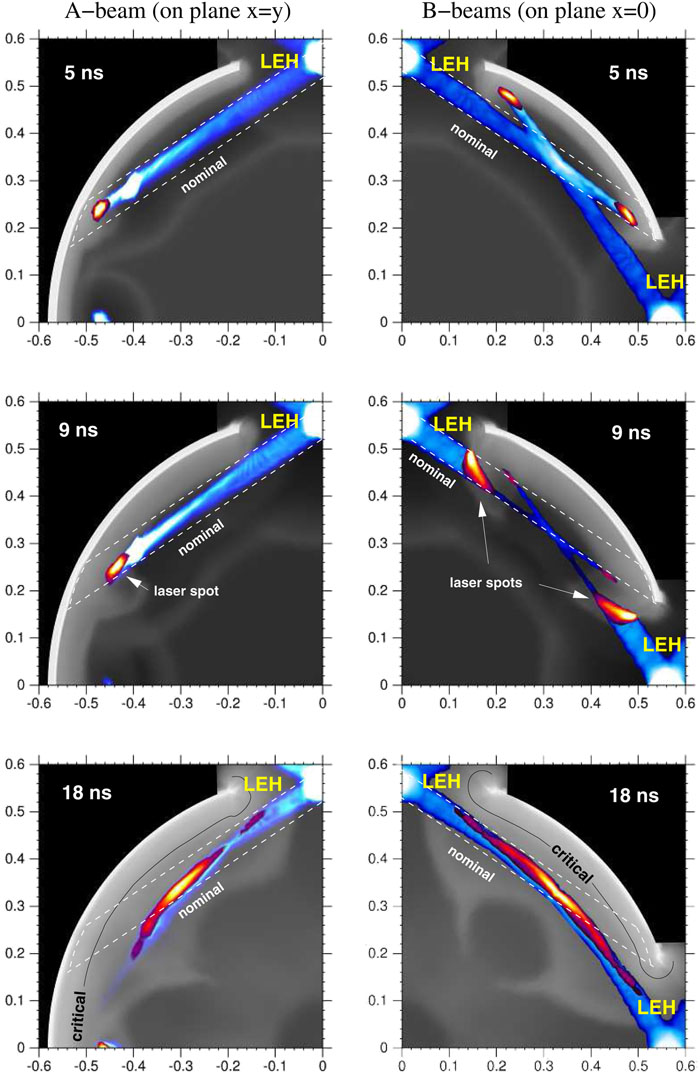
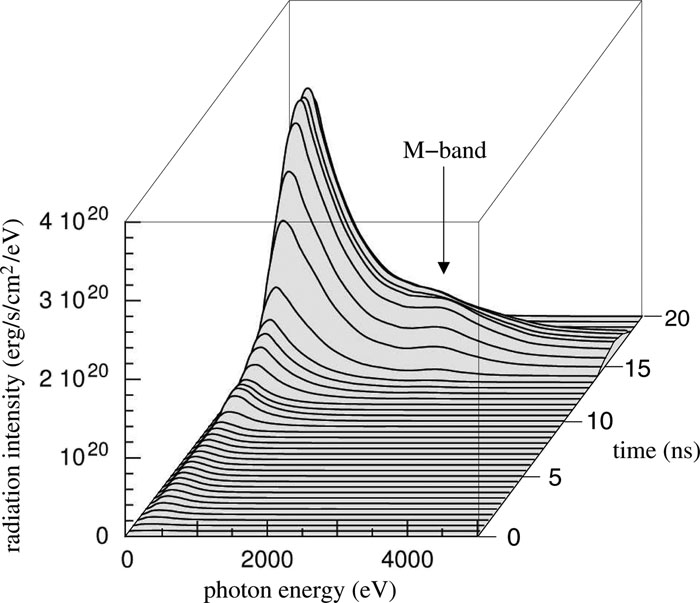
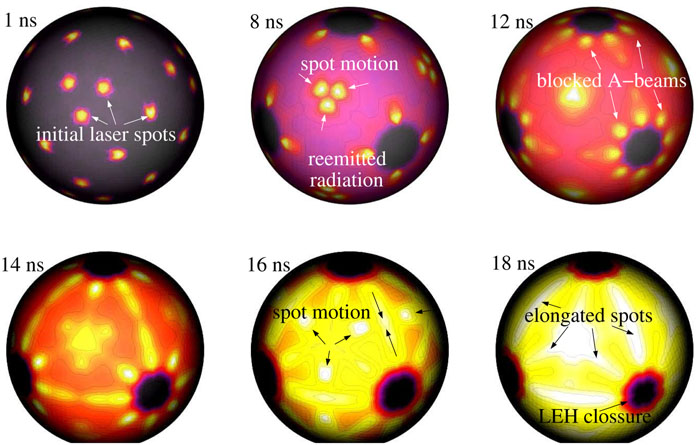
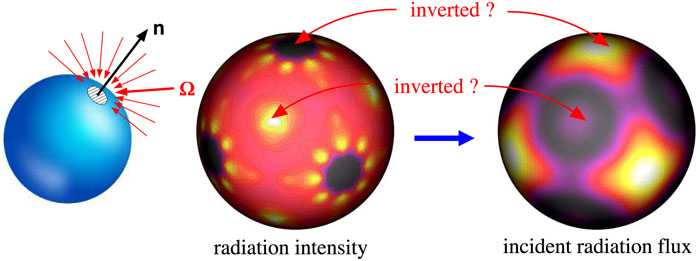
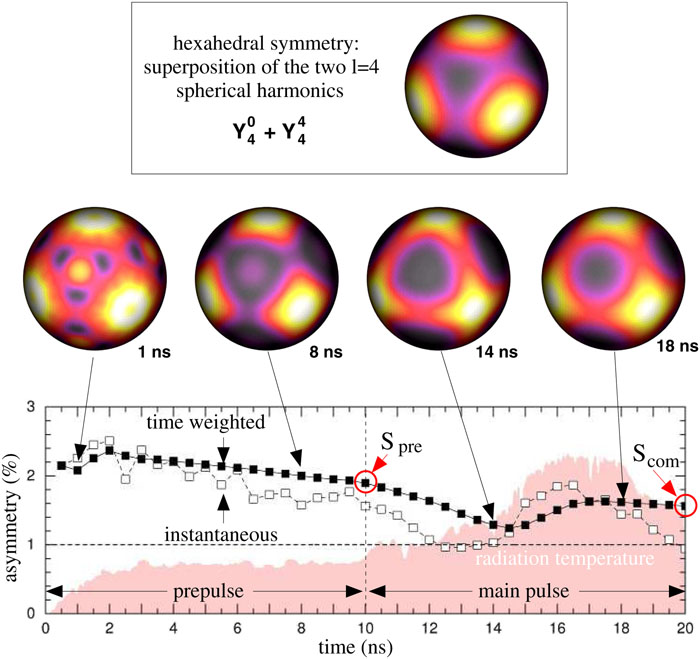
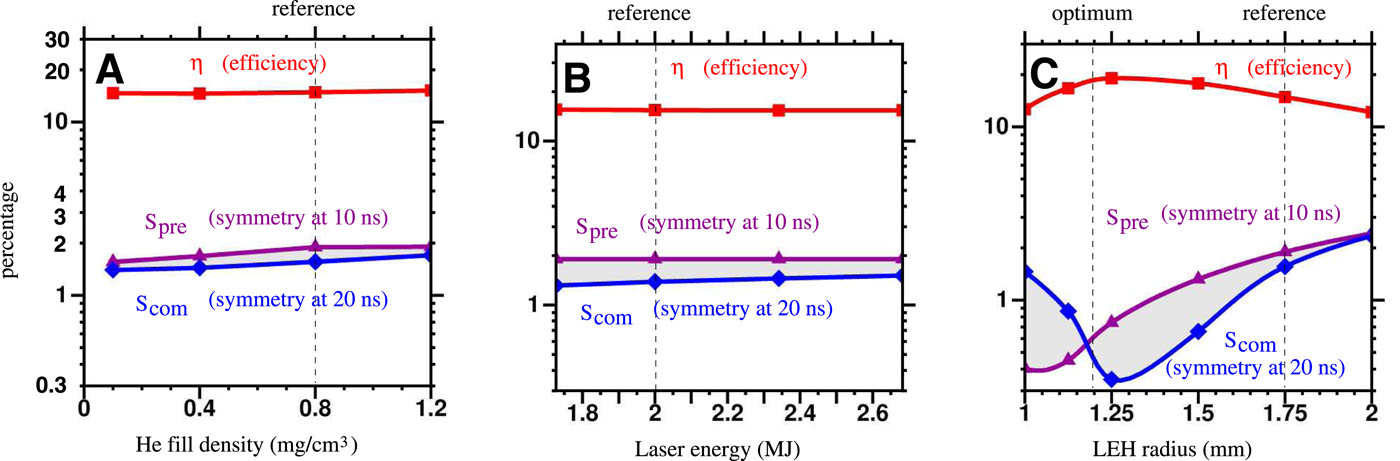
Achieving uniform X-ray irradiation in indirect-drive inertial confinement fusion (ICF) is a key challenge for successful capsule implosion. Spherical hohlraums, particularly those with octahedral laser entrance holes (LEHs), are an alternative to the cylindrical hohlraums currently considered for ICF at NIF (USA) and LMJ (France). These spherical hohlraums are advantageous in terms of irradiation uniformity on the fusion capsule because, owing to their octahedral symmetry, low-order asymmetries cancel out intrinsically. However, they may be less favorable from an energetic point of view, primarily owing to radiation losses through their multiple LEHs. The net balance of these advantages and disadvantages is difficult to determine, because, unlike cylindrical hohlraums, they require fully 3D modeling. To address this, a new version of the MULTI-3D simulation code has been developed. MULTI-3D is a 3D radiation-hydrodynamics code with arbitrary Langrangian–Eulerian (ALE) hydrodynamics, multigroup SN radiation transport, and ray-tracing laser deposition. Using this tool, several aspects of the behavior of spherical hohlraums have been analyzed, with special attention to phenomena inaccessible to 2D modeling. In these targets, laser beams strike the inner walls at very oblique angles, and the expansion of plasma significantly alters the locations where primary X rays are produced. Furthermore, the complex distribution of laser hot spots leads to mutual interactions, where plasma bubbles from one beam intersect the path of another. The laser-to-X-ray energy conversion efficiency has been analyzed as a function of key parameters. The symmetry on the capsule has also been evaluated, revealing nonuniformities of less than 1%.